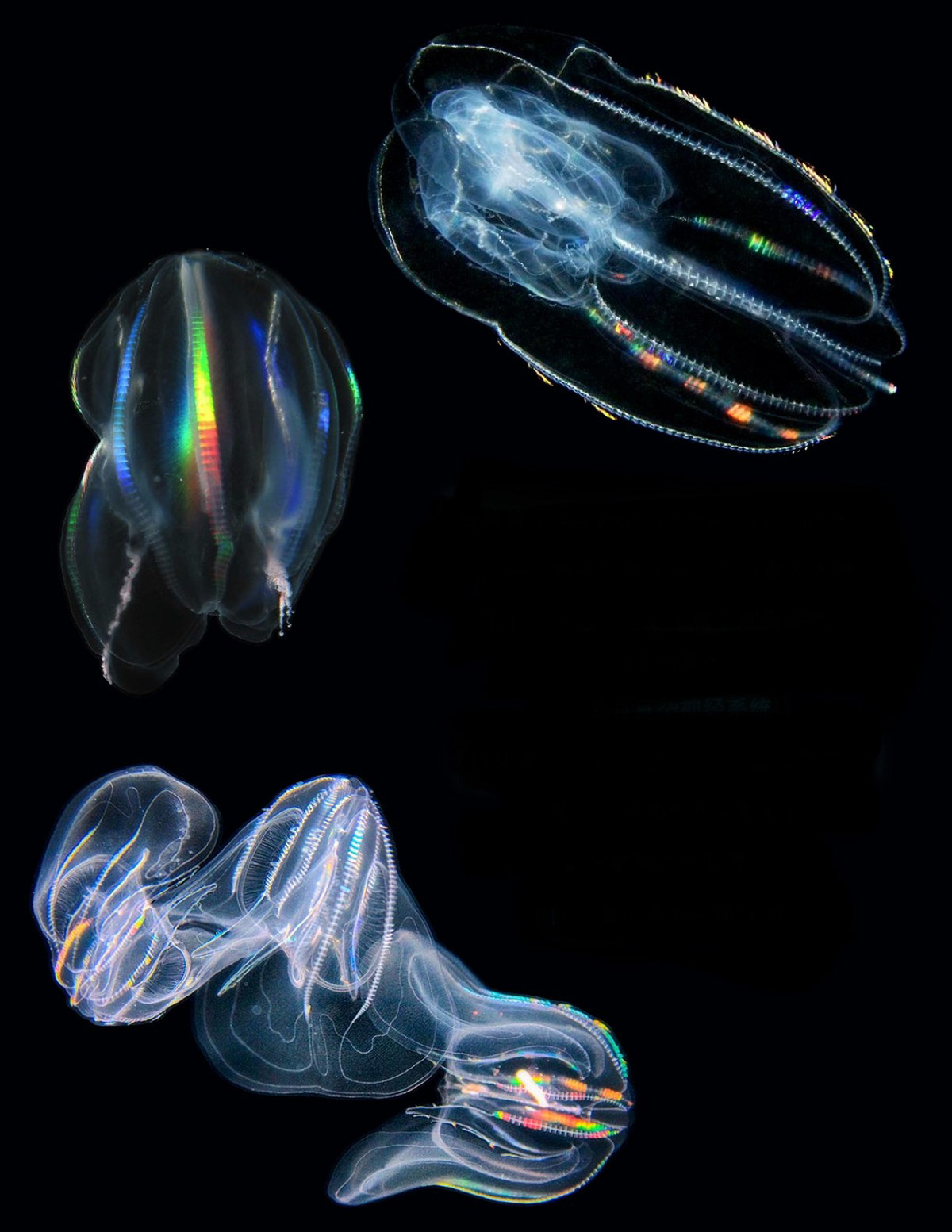
Image: Sea walnut/Mnemiopsis leidyi
The Comb Jelly (Ctenophore)
A creature with tentacles, shaped like a solidified drop of water.
Though called a "jellyfish," it does not belong to the phylum Cnidaria.
Ancient and primitive, Yet possessing a complex nervous system.
Self-luminous, it emits a blue-green fluorescence when disturbed.
Under the light, its comb plates reflect a shifting iris—
Like the mysterious, rhythmic strings of a harp, Responding to the world’s slightest vibrations.
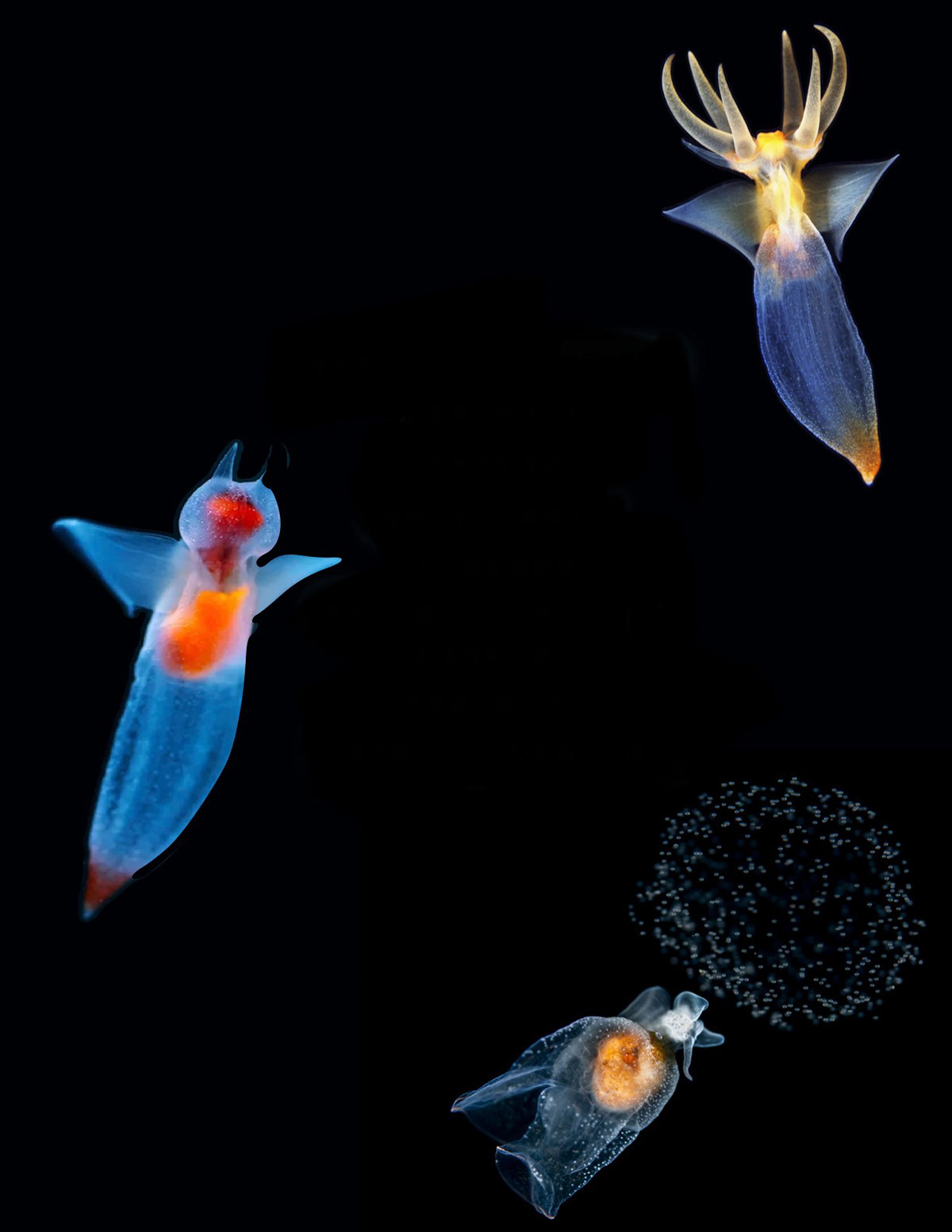
Image: Sea angel/Clione limacina
The Sea Angel (Clione limacina)
A small pteropod mollusk.
A soft-bodied predator—
Slow, precise, hiding its edge within its gentleness.
Specializing in the hunt of the Sea Butterfly.
With wing-like appendages, it "flies" like an angel. Completely transparent and highly sensitive, It is at once crystalline and elusive—
As if a soul were wandering through the frozen polar seas.
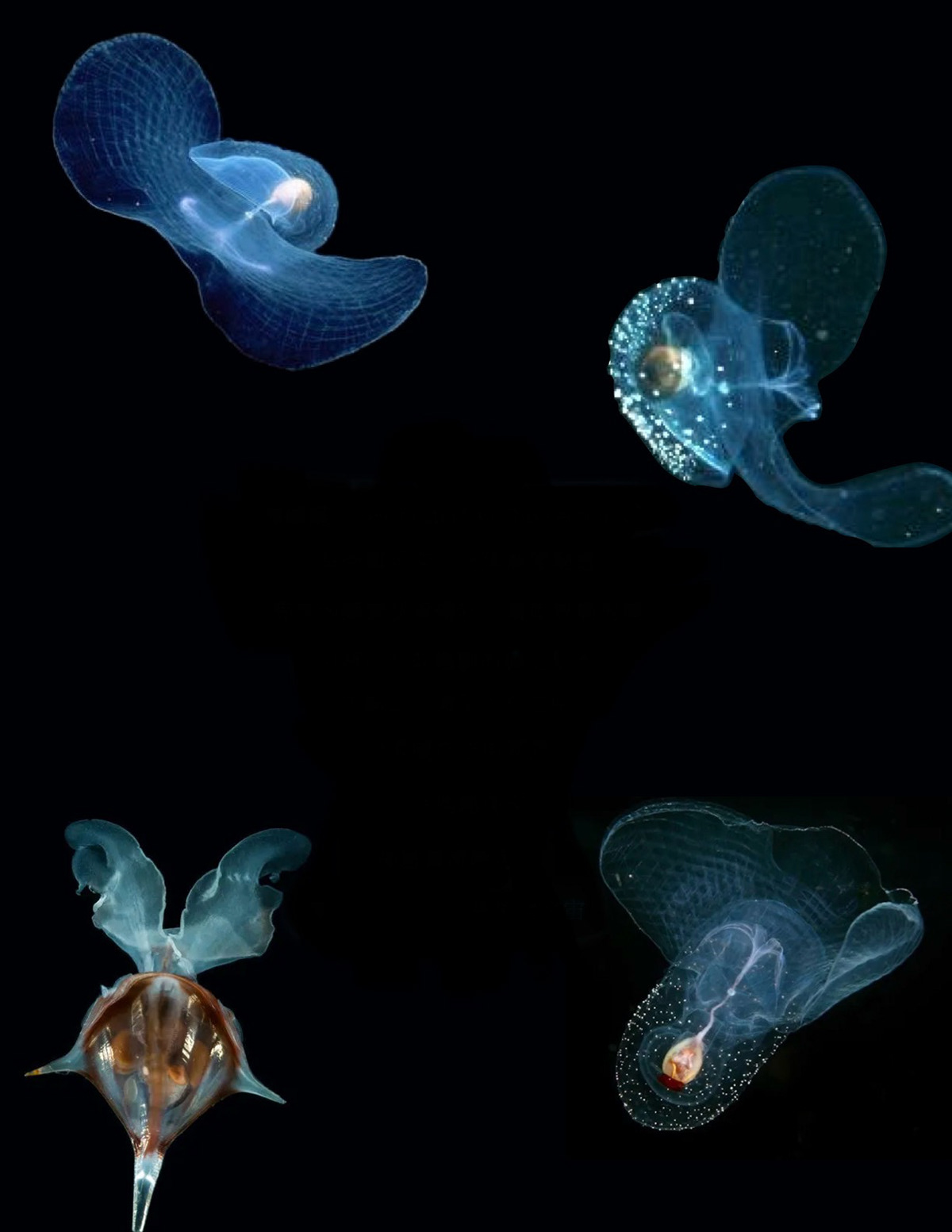
Image: Sea butterfly/Thecosomata
The Sea Butterfly (Thecosomata)
A shelled pteropod with a body as clear as crystal.
Its shell, often spiraled or conical, is as thin as a glass bubble.
It paddles through the water with two wing-like feet, Like a butterfly dancing through the vacuum of space. Its rhythm is soft and slow, like a meditation in mid-air.
Its body structure is surreal—
Internal organs are clearly visible, Like a floating, miniature biological universe.
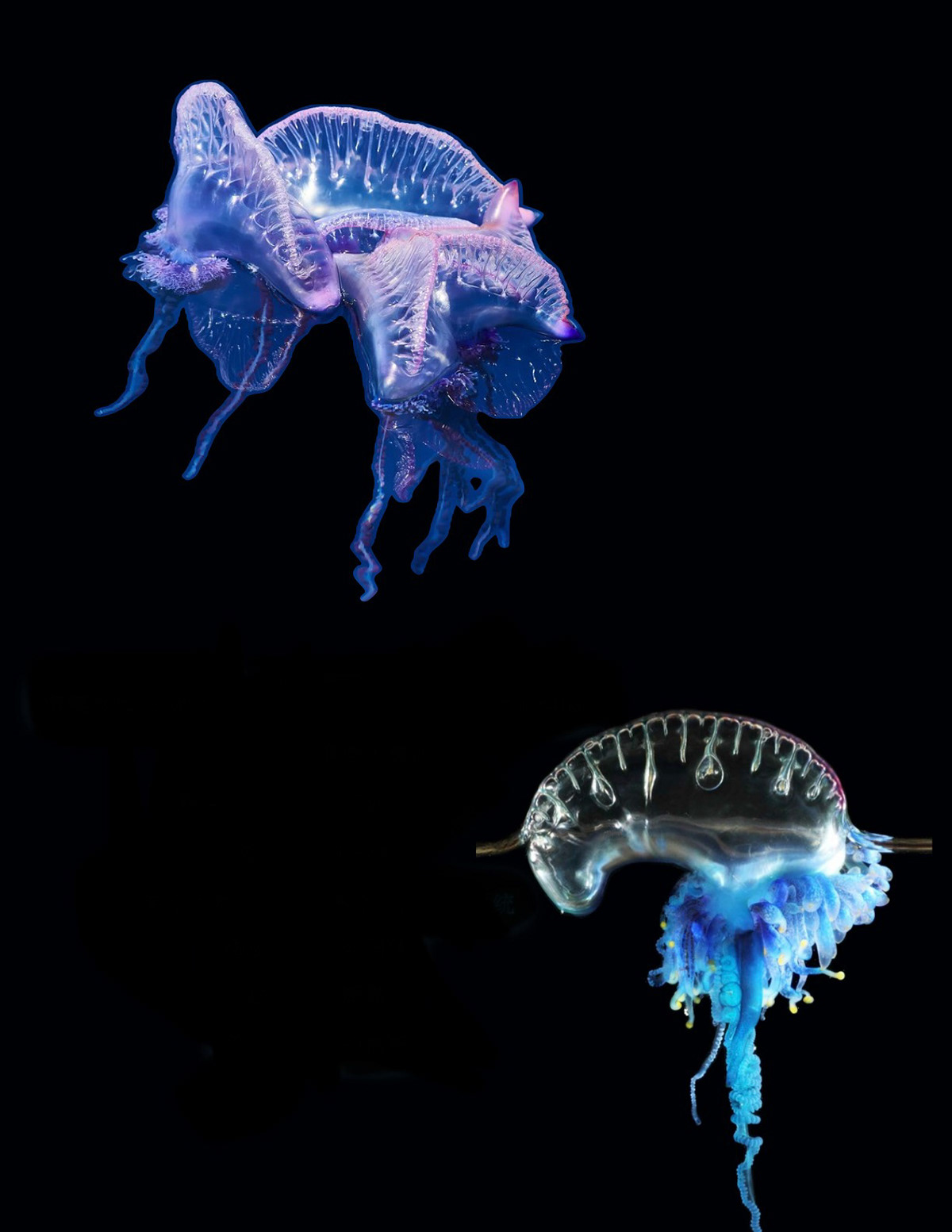
Image: Portuguese man o’war/Physalia physalis
The Portuguese Man O' War (Physalia physalis)
A blue-violet float drifting upon the ocean surface.
Its tentacles possess a potent toxicity, extending for several meters. Frequently found washed ashore on sandy beaches.
It is not a single organism, but a system of multiple functional zooids—
A community of integrated will. Fascinating, yet highly venomous; A beautiful and dangerous temptation.
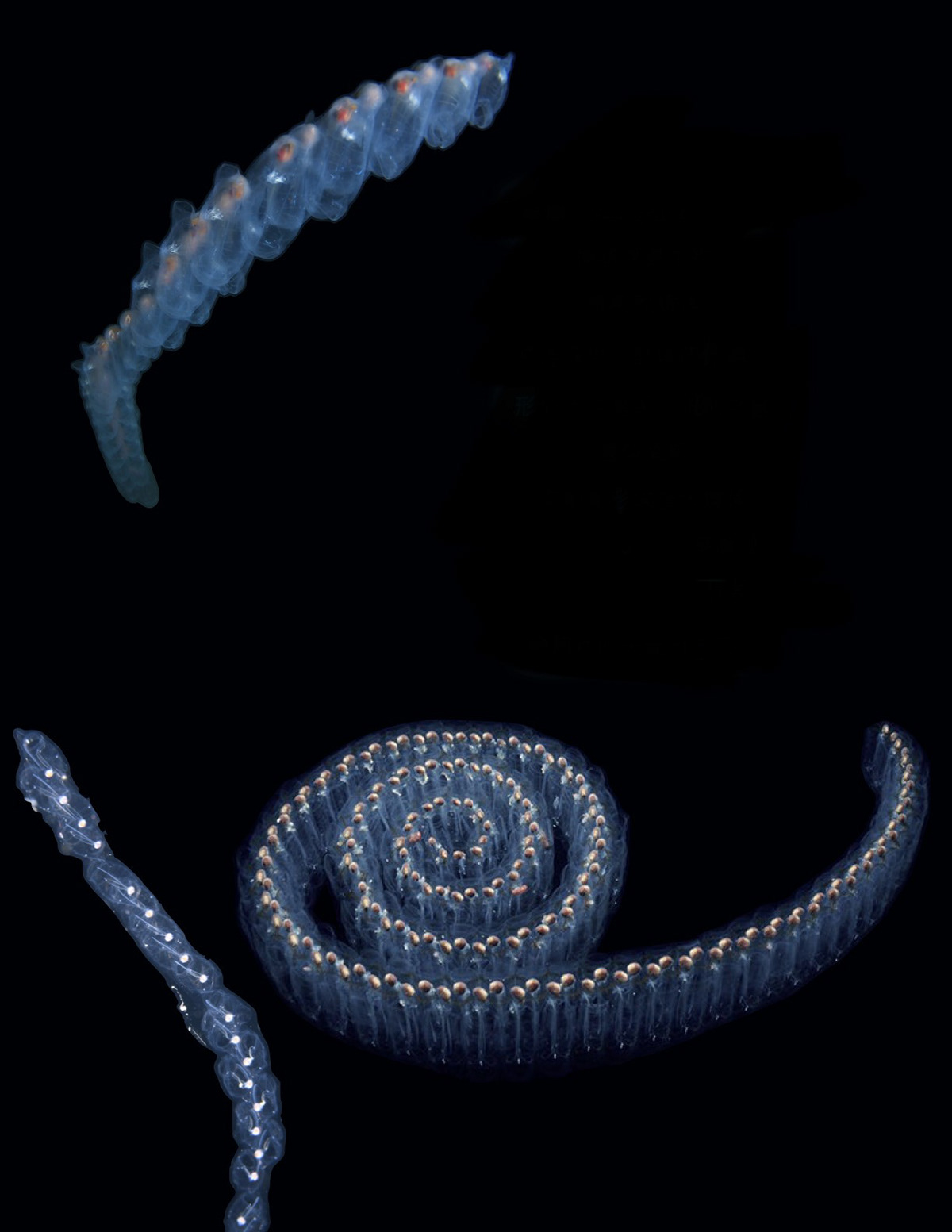
Image: Sea grape/Salp
The Salp (Thaliacea)
A barrel-shaped planktonic tunicate.
A transparent, gelatinous body—
Often linked in long chains, drifting through collective cooperation.
Shaped like a galaxy within the water, a Milky Way of the deep.
Though appearing fragile,
They possess the power to form massive swarms.
Silently, they sink carbon into the deep sea—
The atmosphere’s quiet regulators, And key architects of the Earth's carbon cycle.
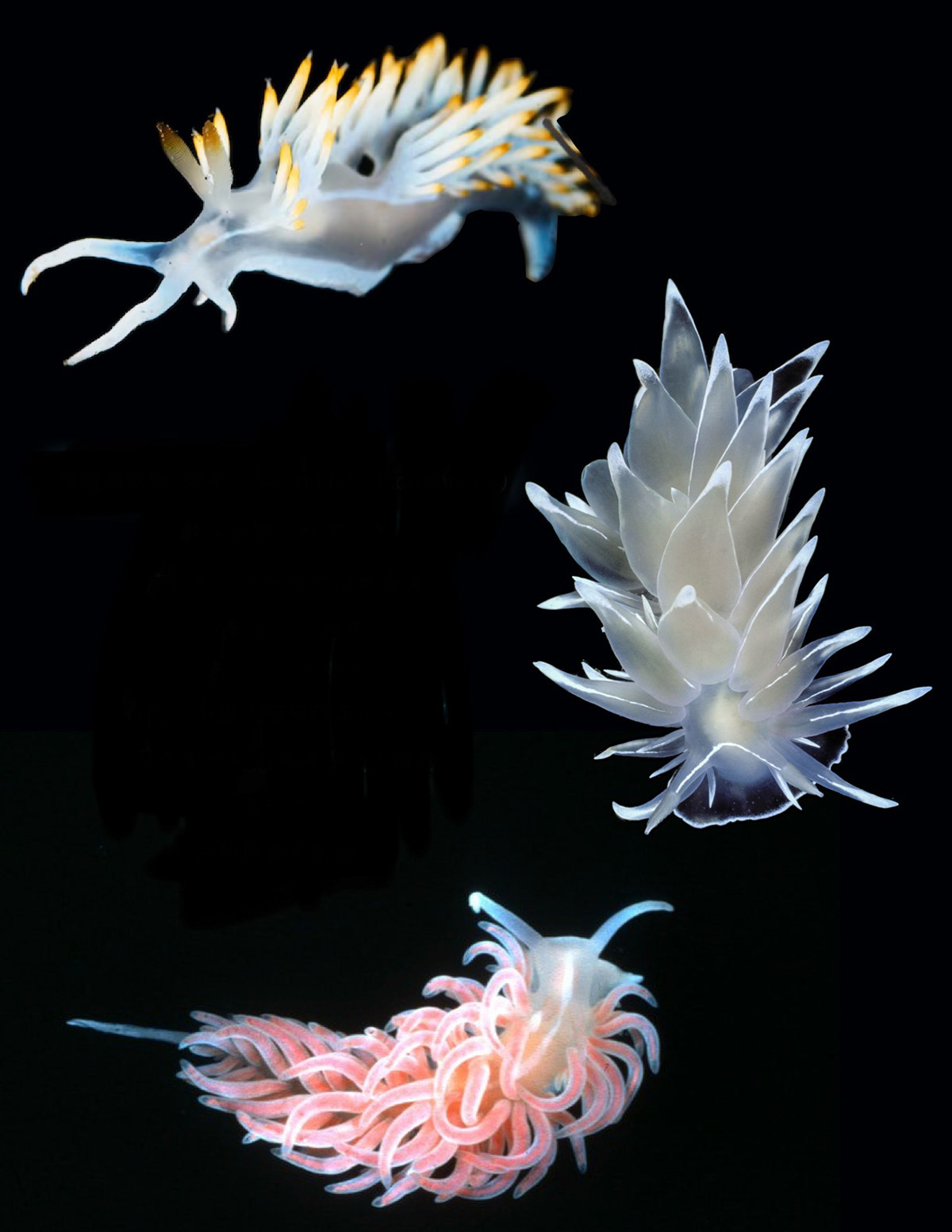
Image: Sea rabbit/Nudibranchs
The Nudibranch (Sea Slugs)
A diverse group of soft-bodied mollusks.
Widespread across tropical and temperate waters. With sensory tentacles emerging from the head and back, some resemble luminous, feathery plumes; others vanish entirely, dissolving into the coral colonies.
Their colors and forms are often mistaken for flora: the "Flowers of Metamorphosis," an alchemy of alien vision.
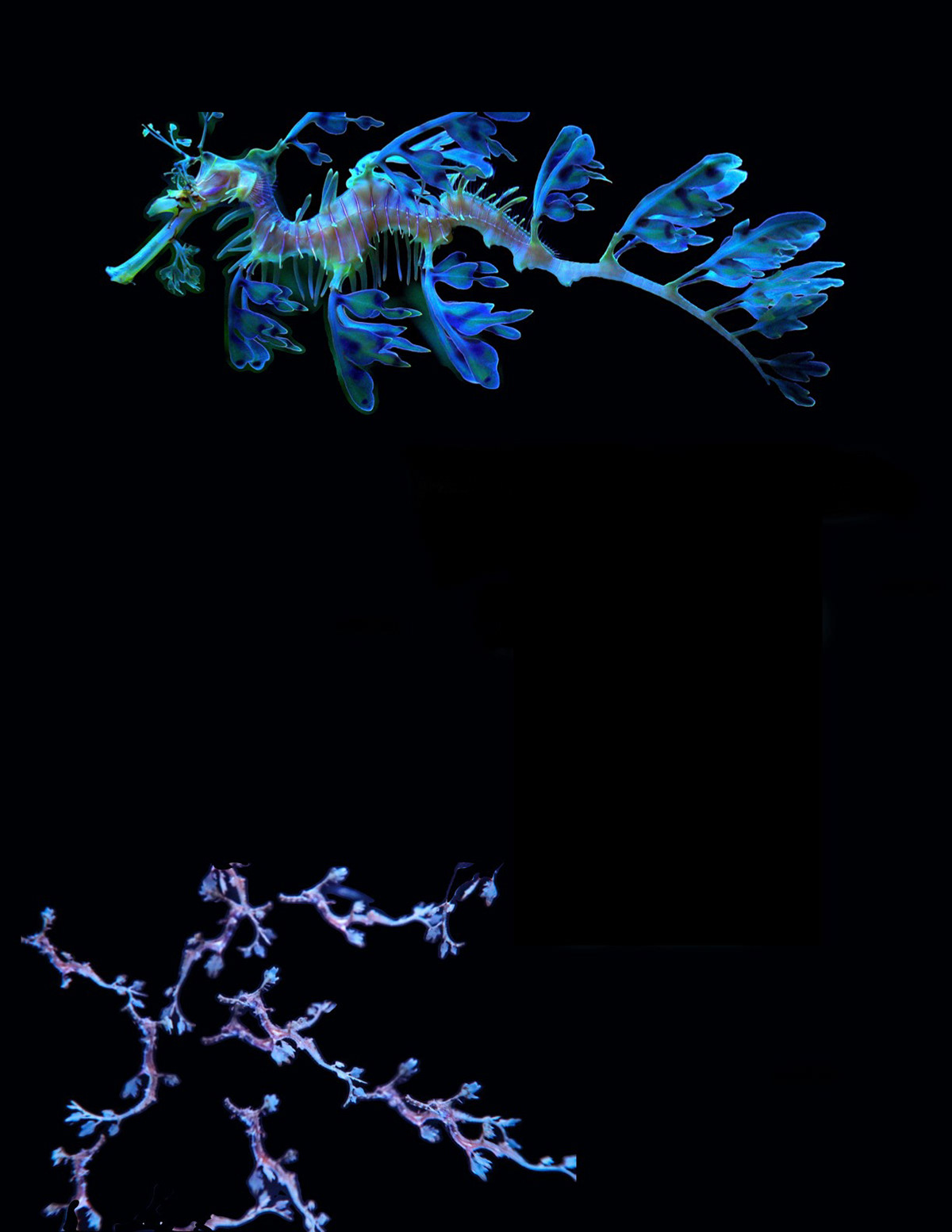
Image: Leafy seadragon/Phycodurus eques
The Leafy Seadragon (Phycodurus eques)
A close relative of the seahorse.
Inhabiting the coastal waters of Southern Australia. Its body is draped in leaf-like filaments resembling seaweed—
It does not swim with intent, But drifts slowly with the current.
Its appearance, like a fragment of floating flora,
Is a deliberate strategy of mimicry.
An elegant disguise that blurs the line between species—
A phantom vanishing into its environment.
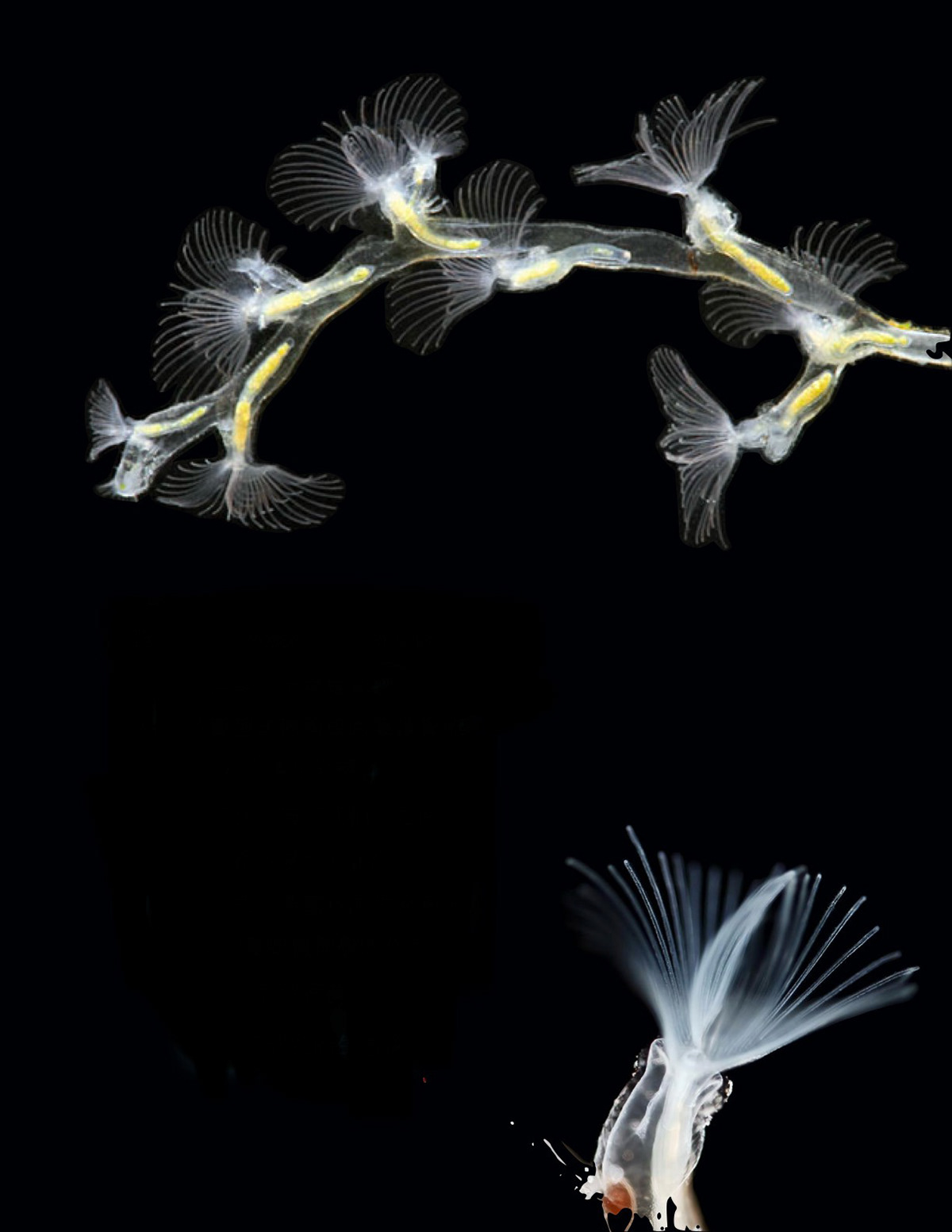
Image: Bryozoa/moss animals
The Moss Animals (Bryozoa)
Colonial invertebrates.
A collective intelligence composed of countless microscopic individuals.
Neither a single entity nor a mere crowd, They exist in the space between "I" and "We."
Their existence is not centralized, But a distributed, multi-layered life system.
Together, they construct a plant-like skeleton—
Resembling moss, An ecological form that looks like a flower, yet is not.
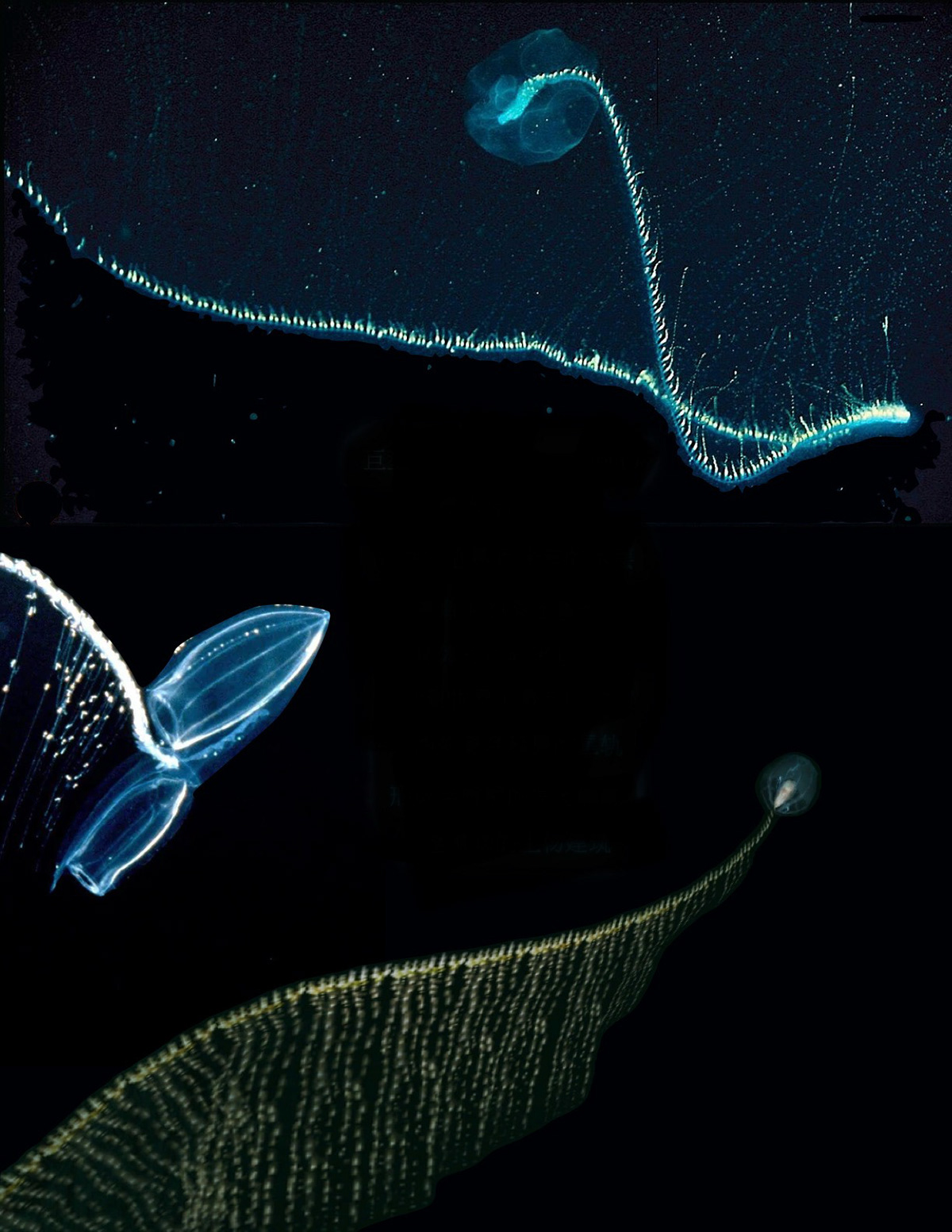
Image: Praya dubia
The Giant Siphonophore (Praya dubia)
A unique species of colonial organism.
Inhabiting the depths hundreds of meters below the surface—
A silken thread of soft light in the midnight zone.
With a body extending over 40 meters in length, It is perhaps the longest animal in the world.
Its structure resembles a suspended, sprawling star-trail;
Its form is like translucent, bioluminescent silk— A living, fluid architecture.
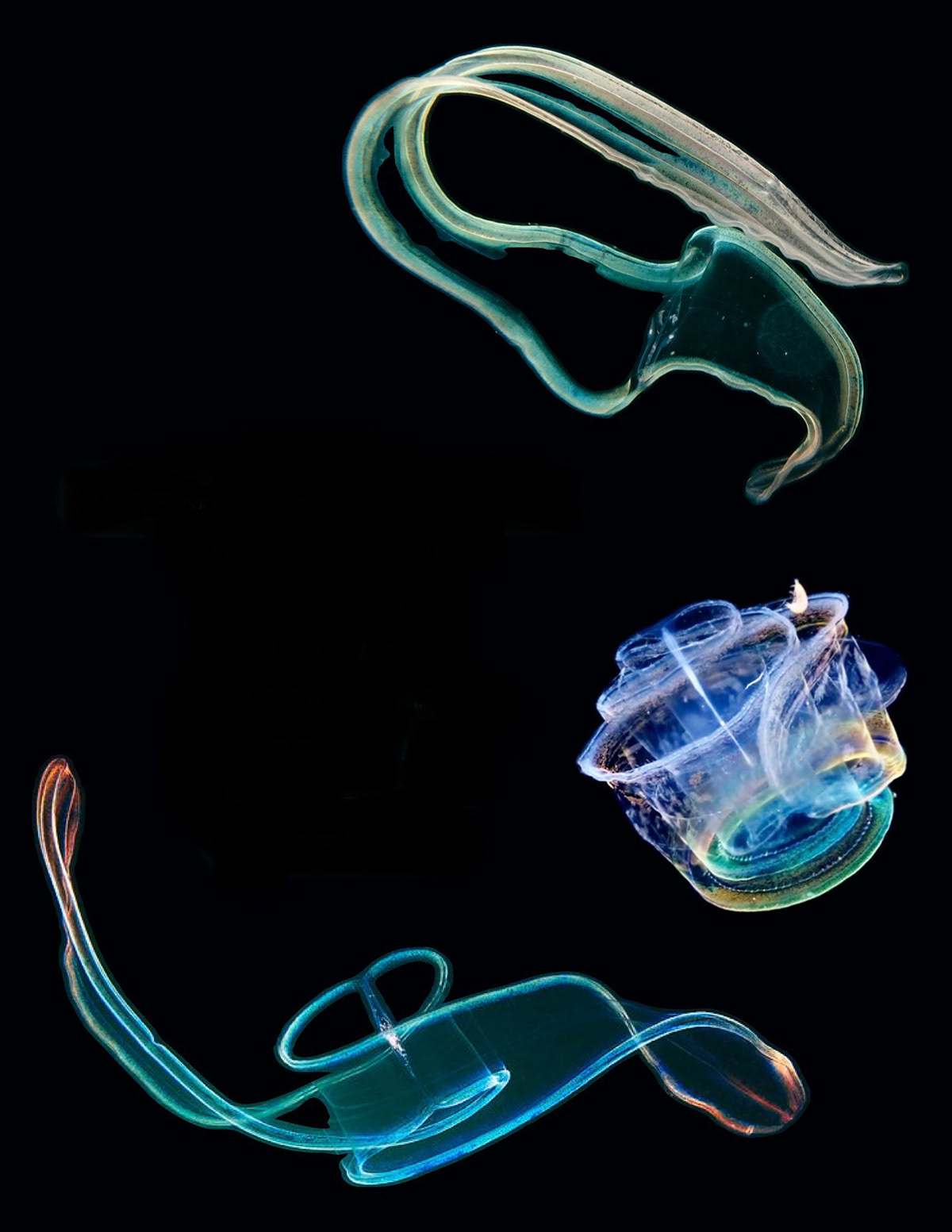
Image: Venus girdle /Cestum veneris
The Venus Girdle (Cestum veneris)
A species of comb jelly with a flattened, ribbon-like structure.
Inhabiting the mid-water zones, It preys upon tiny zooplankton. With bioluminescent cells lining its edges, It appears like a dancing spectrum of light.
A masterpiece of both bioluminescence and light diffraction— A phantom within a deep-blue dream.
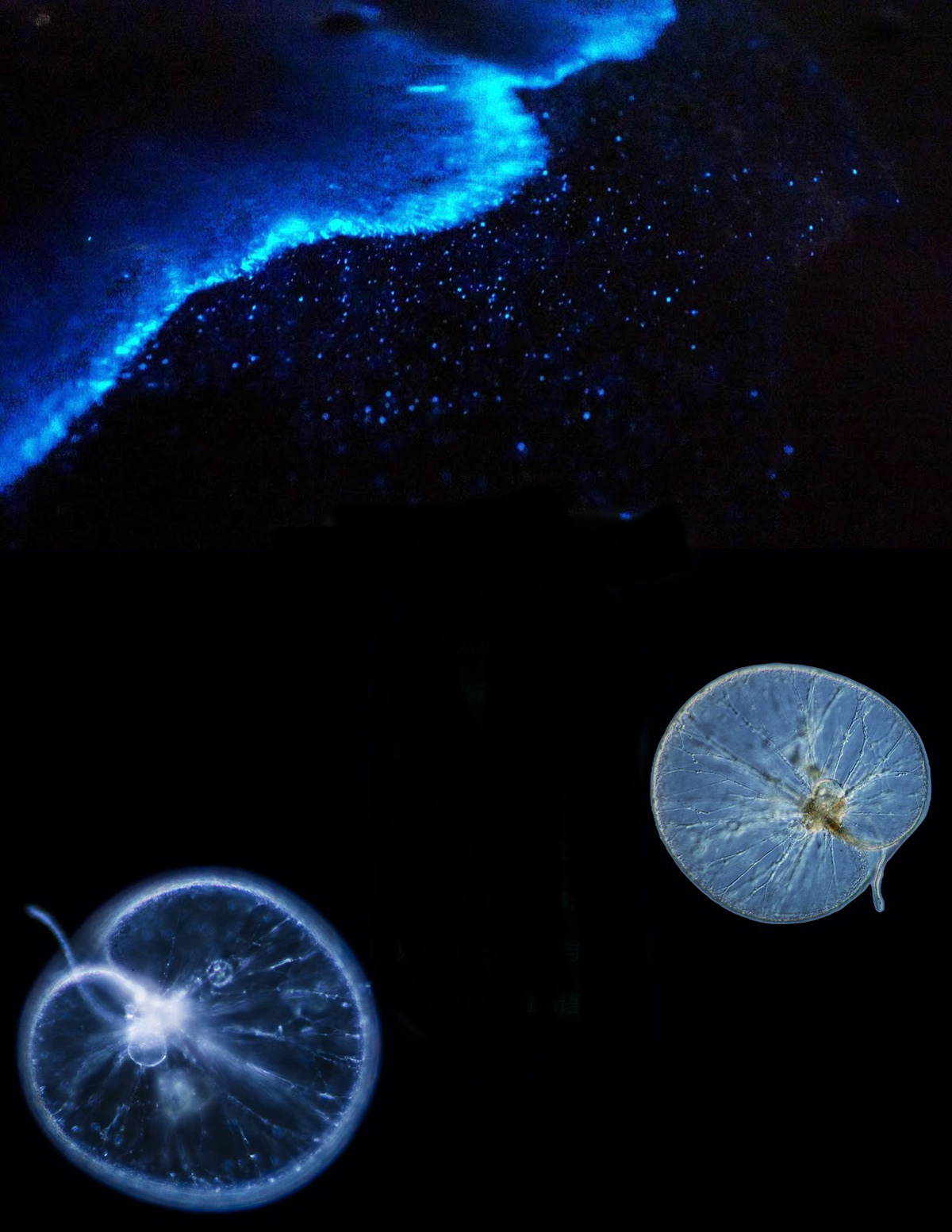
Image: Noctiluca scintillans
The Sea Sparkle (Noctiluca scintillans)
Single-celled planktonic organisms.
Commonly found along tropical coastlines.
They emit a blue glow as the night waves surge,
Sentimental halos of light flowing slowly along the shore.
Billions of microscopic lives Composing the most psychedelic of fluorescent seas. Relying neither on language nor on action,
They exist and express themselves through dim light alone—
The whisperers in the dark.